Charles Sprague Pearce (1851-1914)
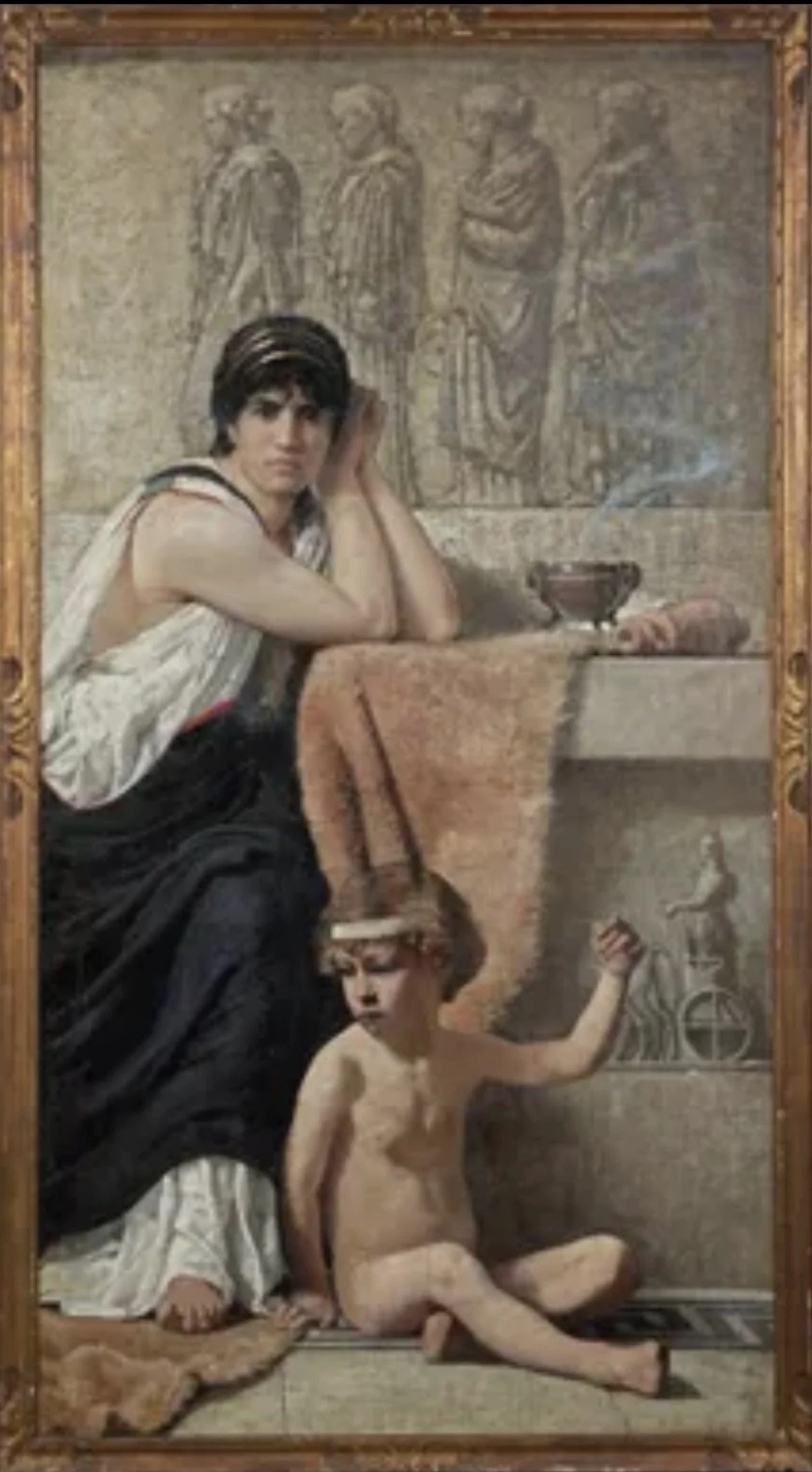
The Oracle at Delphi
Oil on canvas, signed
The Pythia, otherwise known as the Oracle wielded pronouncements that could influence wars, the founding of cities, and the fate of entire kingdoms.
This particular vision was given to the father of Oedipus, King Laius. He was warned that his sone would kill him and marry his queen. Attempts to escape the prophecy ultimately helped bring about its fulfillment, according to the myth.
The figure of Oedipus as a child is transparent, and the intensity of the Pythia upon seeing this tragedy unfold is beautifully rendered.
Charles Sprague Pearce
An American painter who spent much of his career and life in France, he became particularly known for his idealized depictions of women, rural life, and classical subjects.
Born in Boston, Pearce moved to Paris in 1873 and studied under the celebrated academic painter Léon Bonnat. Pearce was especially successful during the late Victorian period, exhibiting at the Paris Salon and earning international recognition.
One of Pearce’s most significant commissions was a series of allegorical paintings for the Library of Congress in Washington, D.C., completed in 1896. This painting, The Oracle at Delphi, remained in the possession of his family, in France, passed down to his son, Emile Carrière (1874-1946) and then by descent until it was purchased by the current owners. The family clearly valued this piece in particular to have kept it, as he was quite a prolific artist, having produced at least several hundred individual works.