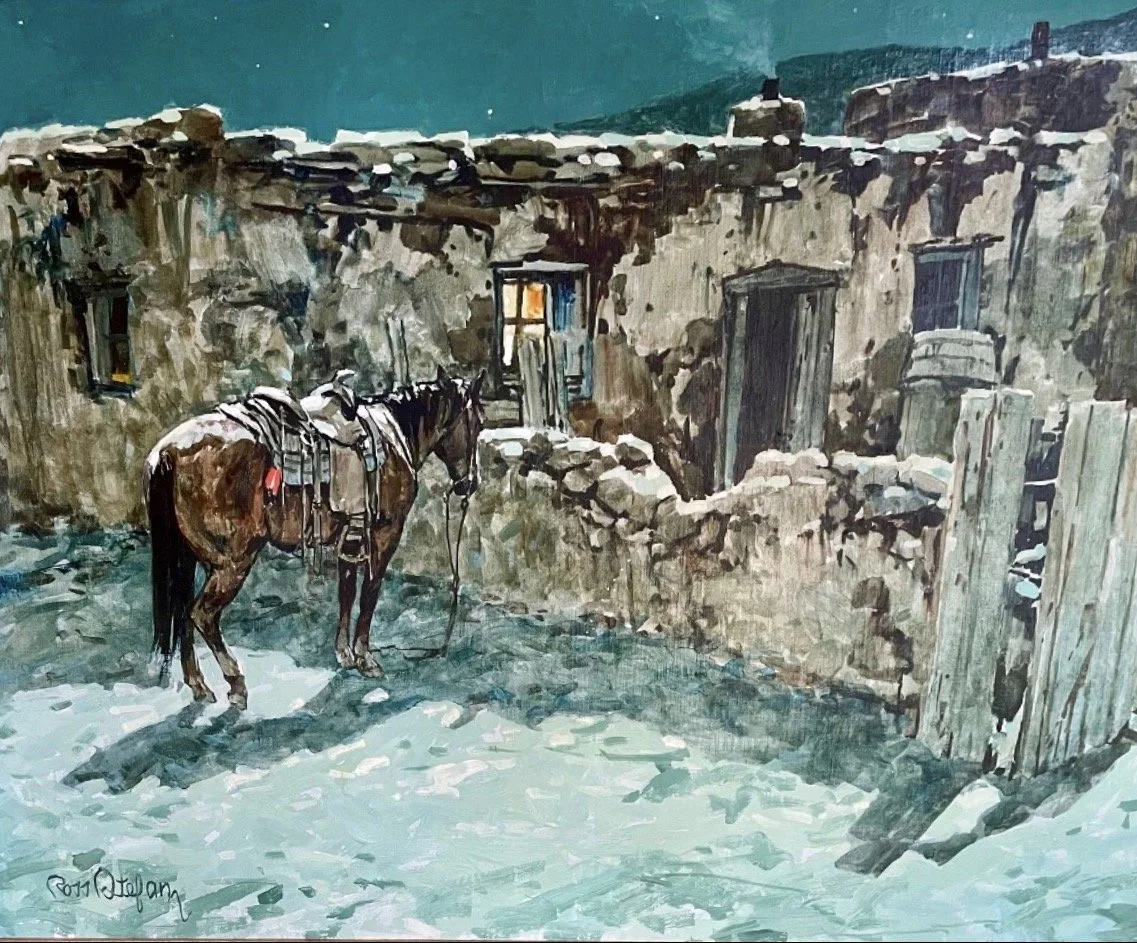
Ross Stefan, Moonlight and Adobe
Ross Stefan (1934-1999), Tucson, Arizona
Oil on canvas, signed
An evening with clear moonlit skies, a saddled horse waits beside a weathered adobe while smoke rises from the chimney. A single window glows with warm light against the blue-green of the barren ground. The quiet, empty yard suggests a rider who has just stepped inside, but plans to leave soon. This scene of stillness and shelter is one that Stefan returned to often in his views of Southwestern life.
Ross Stefan
Born in Milwaukee, Stefan began drawing horses as a child, and at age seven the Milwaukee Journal printed two of his horse sketches. Wisconsin’s harsh winters and repeated bouts of pneumonia led his family to move to Tucson, where he studied art at the University of Arizona and sketched for local newspapers.
In 1955 he left his studies to paint full time, opening a studio and gallery in Tubac, and that same year began traveling into the desert to paint and draw the Navajo people and their land. His national reputation arrived in 1971, when his one-man show in New York nearly sold out on opening night. Senator Barry Goldwater often called him a national treasure, and in 1978, John K. Goodman’s book on Stefan won the Cowboy Hall of Fame’s Western Heritage award for outstanding art book of that year.
Often described as a Southwestern Impressionist, Stefan combined broad, confident brushwork and heightened color with careful accuracy in his landscapes, figures, and architecture. His scenes of pueblo life and the Southern Arizona landscape remain archetypes of the genre, and Moonlight and Adobe shows those strengths in an intimate, nocturnal key.