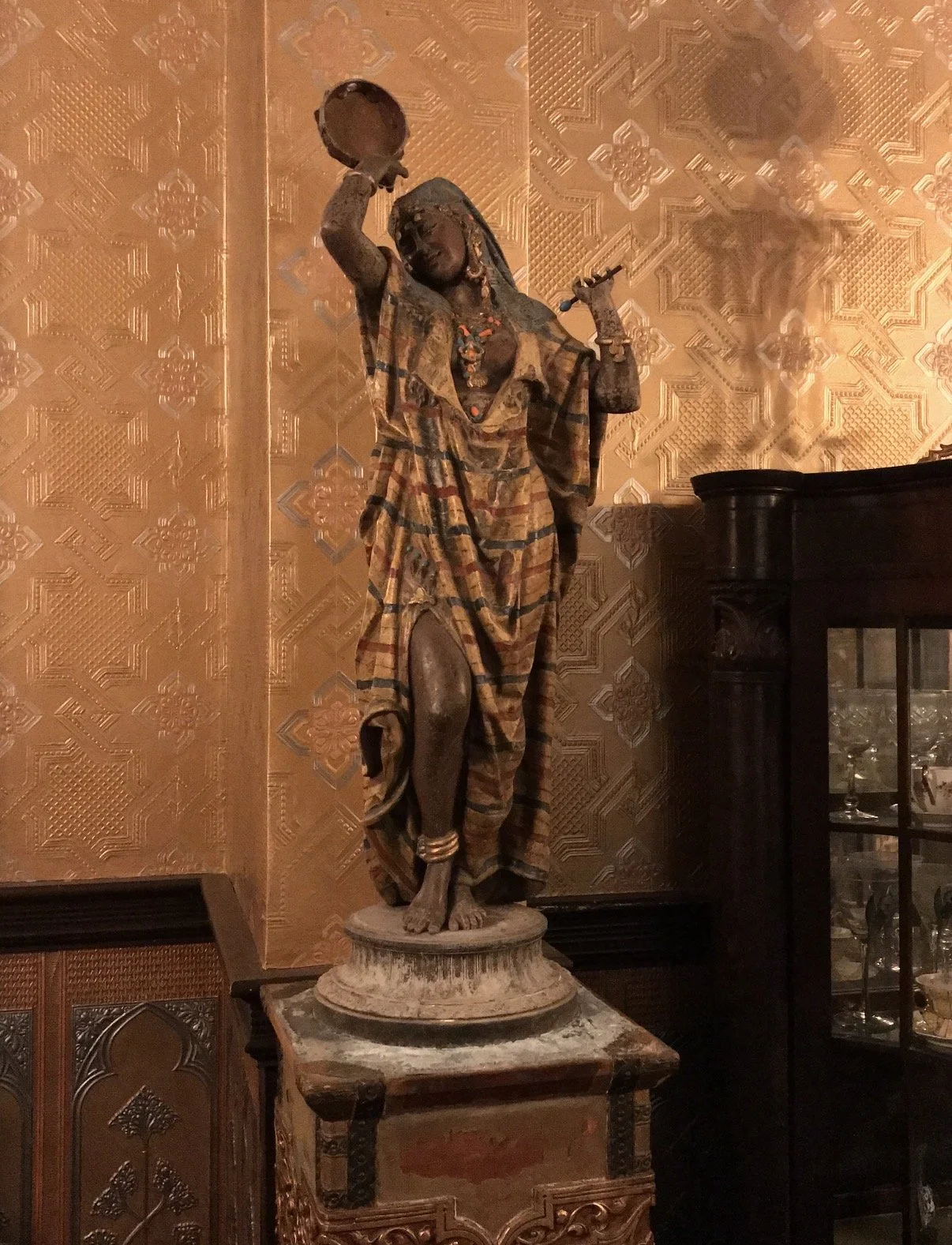
Orientalist Tambourine Dancer
French, late 19th Century Polychrome-painted white metal
Dramatically posed, this figure of a tambourine dancer reflects the late nineteenth-century European fascination with Orientalism — the romanticized depiction of North Africa, Egypt, the Middle Easte, and the Ottoman world in European art.
Barefoot and richly dressed in striped, flowing garments, the dancer wears large hoop earings, bracelets, anklets, and a colorful necklace. Her raised tambourine, exposed leg, and sweeping drapery give the figure a strong sense of movement, as though she has been captured in the middle of a performance.
White Metal Painted Sculpture in the Victorian Period
Large polychrome figures such as these were made for fashionable European and American interiors, where their brilliant painted surfaces and exoticised subjects provided a striking contrast to traditional furniture. Spelter, a zinc-based white metal alloy became a popular alternative to bronze for decorative sculpture. It could be cast relatively inexpensively and then finished to closely imitate the darker patinas of bronze. This allowed large, elaborate sculptures to be produced for the expanding middle-and upper-middle class market without the considerably greater cost of casting them in bronze.
Spelter was particularly well suited to polychrome decoration. Its surface could be painted, patinated, gilded, and highlighted in different colors, making it ideal for the richly costumed Orientalist figures fashionable in late Victorian interiors. Jewelry, textiles, skin tones, and other details could all be individually colored, giving these sculptures a theatrical quality that conventional bronze could not easily achileve. There are many examples of spelter castings throughout the house.
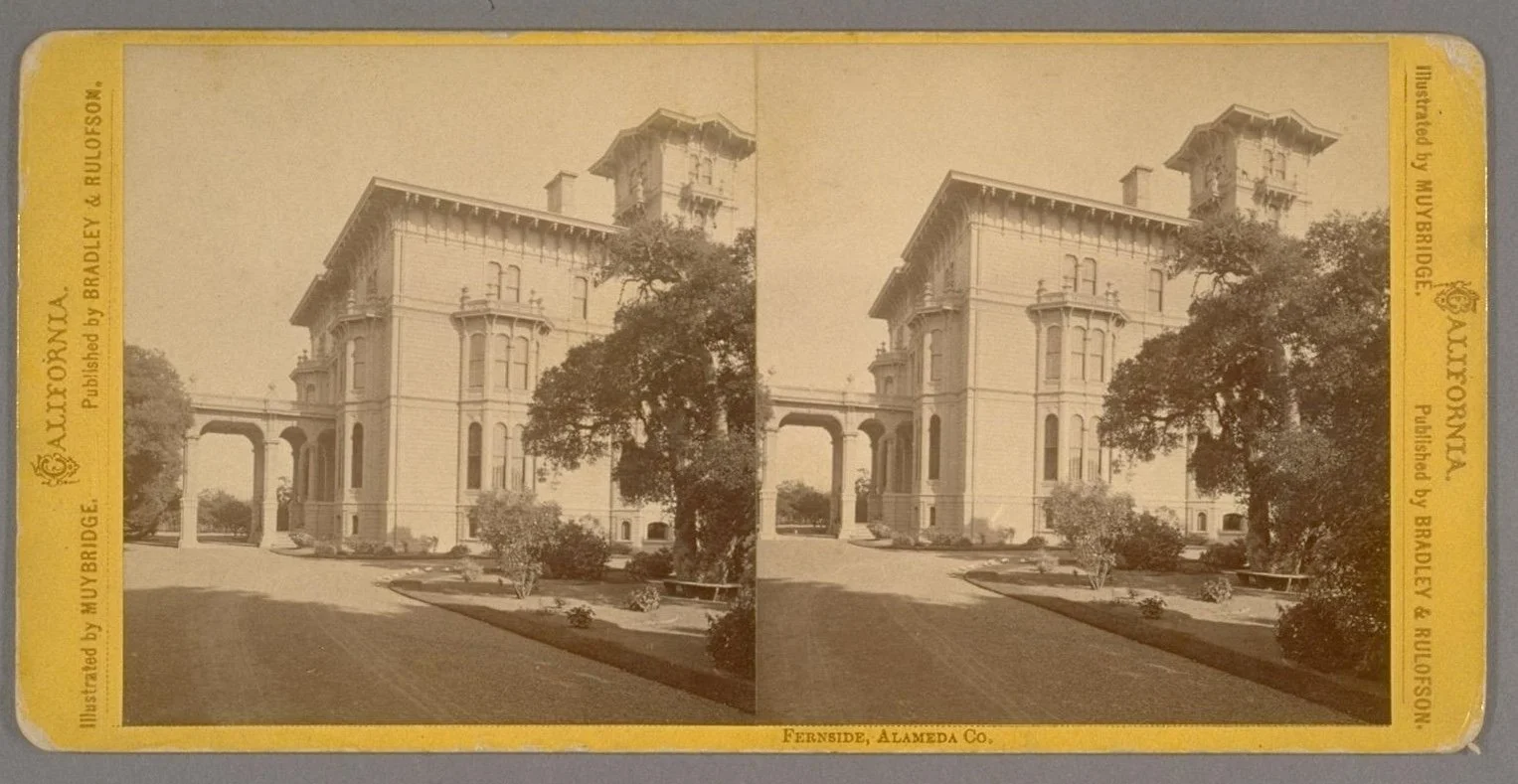
Fernside, Alameda, California, photographed by Eadweard Muybridge, 1870s. Courtesy UC Berkeley, Bancroft Library.