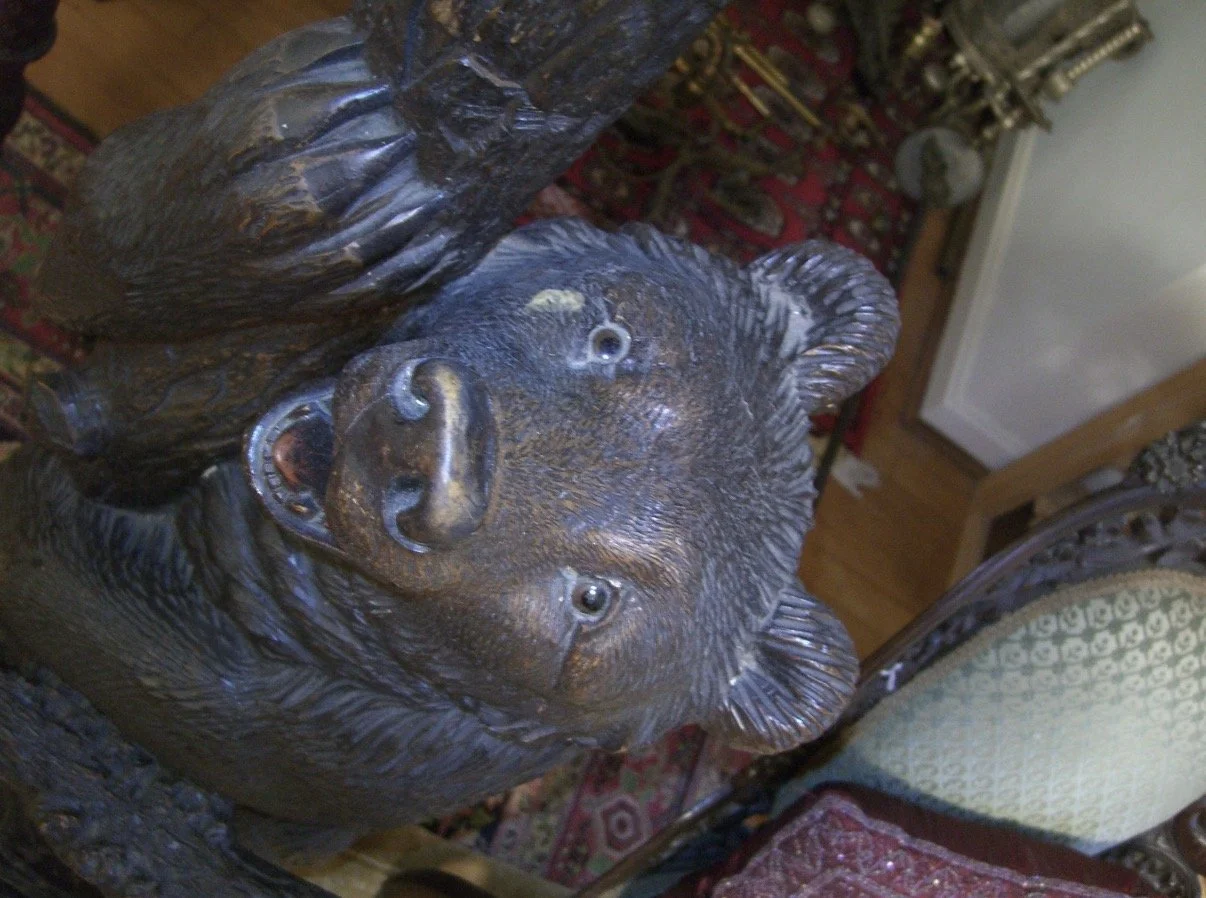
Black Forest Bear Hall Stand
Brienz, Switzerland, Late 19th century
This striking Black Forest bear hall tree was carved in the late 19th century by the workshops in the Brienz region of Switzerland. The piece reflects the era’s fascination with alpine wildlife and rustic naturalism. Black Forest woodcarvings were popular throughout Europe and America, symbolizing a romantic ideal of wilderness brought indoors.
The Bear Carvers of Brienz
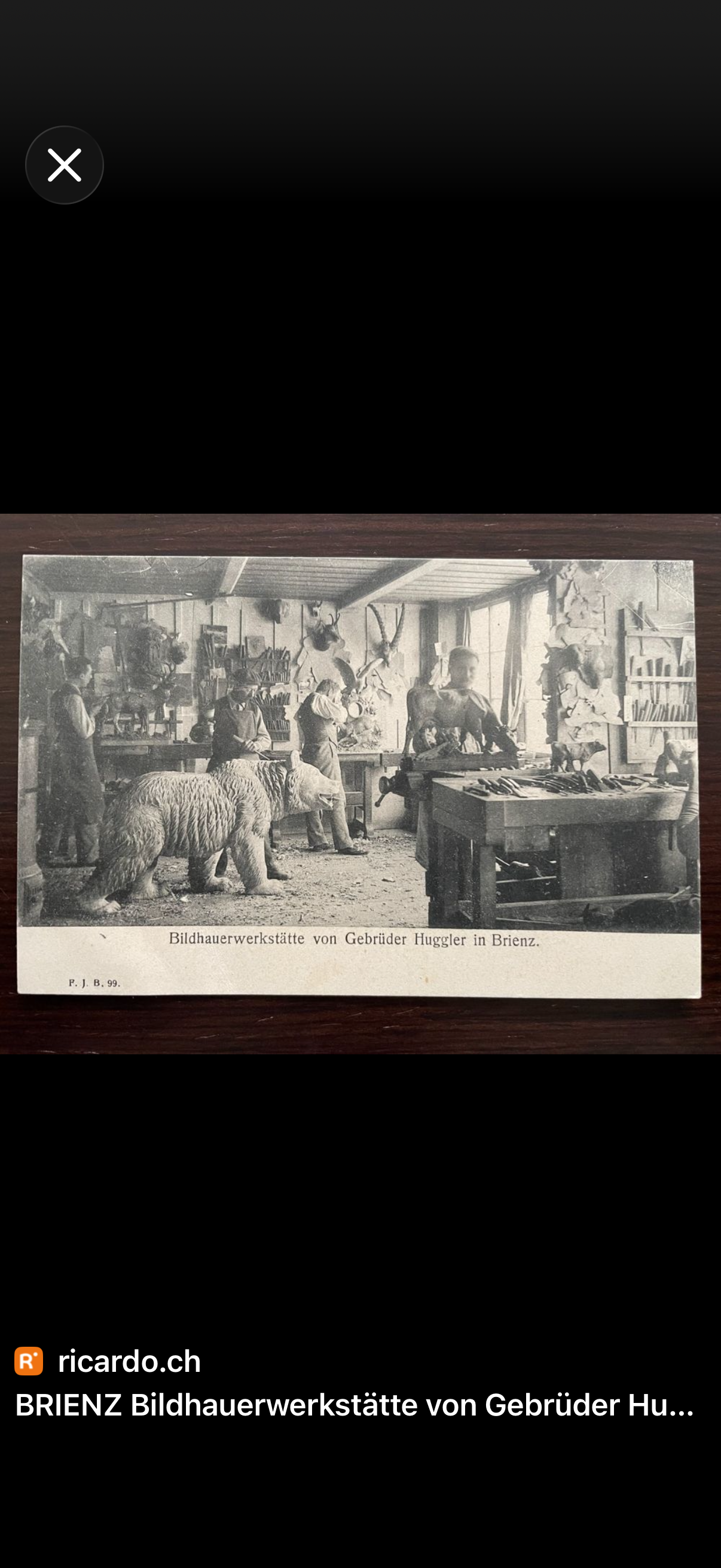
The remarkable bear hall stands traditionally known as “Black Forest” carvings were not from the Black Forest of Germany, but rather were the work of generations of Swiss woodcarvers centered in Brienz, Switzerland. The craft began as a cottage industry in the early nineteenth century, when local farming families supplemented their modest incomes by producing carved wooden objects for travelers visiting the Swiss Alps. By the second half of the century, Brienz had become internationally recognized as a center of woodcarving with approximatley 2000 people engaged in the trade at its height.
Carving was frequently a family occupation, practiced in small home workshops. Individual craftsmen often specialized, as bears were fashioned as sculptures, but also incorporated into clocks, chairs, umbrella stands, hat and coat stands, and other furnishings, as well as on a smaller scale as desktop ornamentation such as inkwells and pen holders. Much of this work was exported, particularly to wealthy customers in England and America.
The establishment of the Brienz School of Woodcarving in 1884 helped formalize this tradition and train generations of craftsmen, producing the finest woodcarvers with extraordinary naturalistic techniques. Rather than simply incising decorative lines in tot he wood, they cut the bear’s fur so that the strokes followed the animal’s anatomy and the direction of its coat. Faces, paws, claws and pasture gave individual bears surprisingly distinct personalities.
Historic postcard showing the Huggler workshop, Brienz, Switzerland