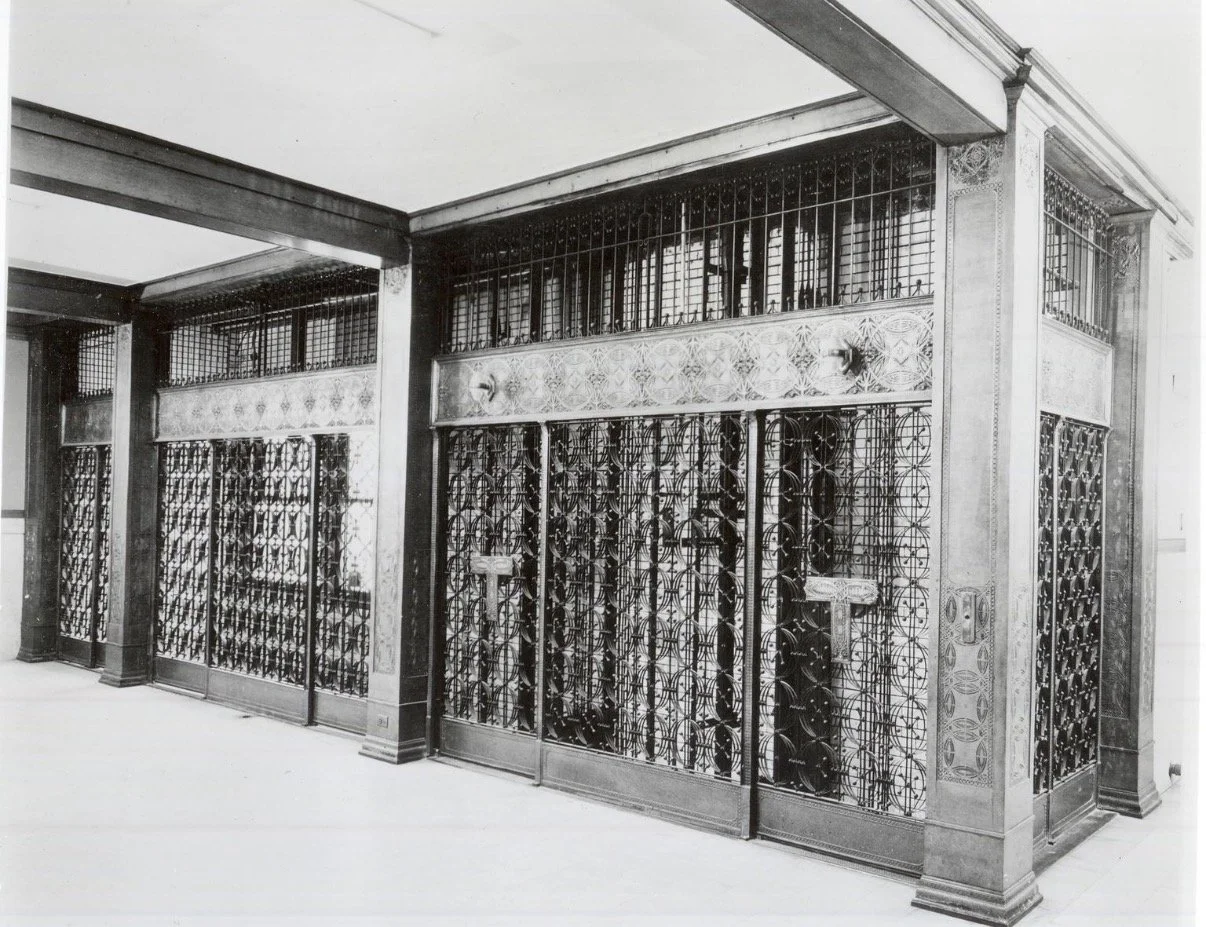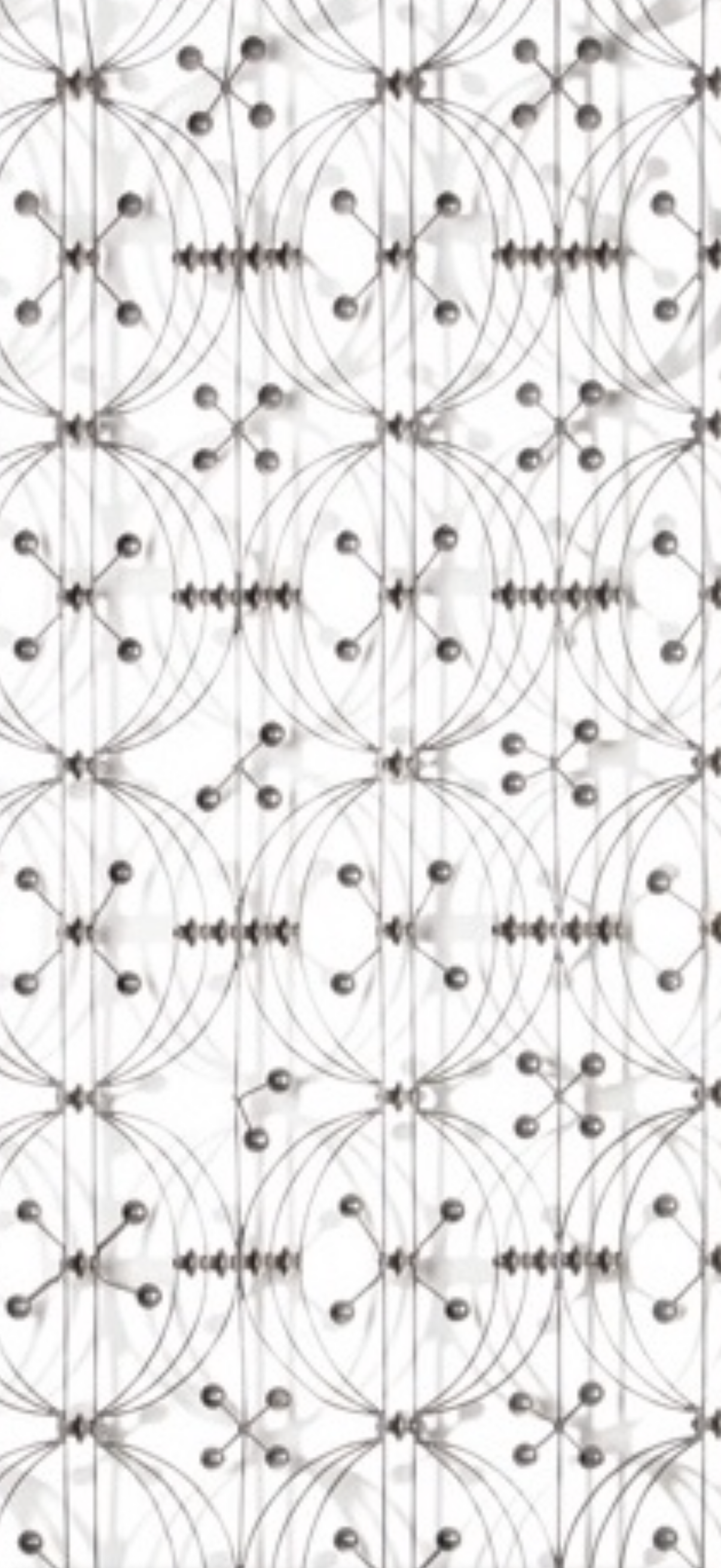
Chicago Stock Exchange Elevator Gate, 1893-94
Dankmar Adler, German-American, (1844-1900), Louis Sullivan, American, (1856-1924), Firm of Adler & Sullivan, Chicago, manufactured by Winslow Brothers, USA. wrought iron.
Originally from The Chicago Stock Exchange, 30 North LaSalle Street, Chicago, Illinois, ca. 1893-1972
This is an elevator gate salvaged from the demolition of the Chicago Stock Exchange. It is a prime example of Sullivan’s philosophy of “form ever follows function” by allowing visitors to reveal the beauty of the precision of the mechanical function of the elevators themselves. Sullivan described the X and ball patterns as “stylized seed germs bursting from their pods.” He used them as a symbol of the growth of a skyscraper from a foundational idea, but also to symbolize Chicago as the nation’s agricultural trade hub.
The Design of the Elevator Gates
The dynamic geometric design of circles and spheres in the elevator doors' grillwork was described by architect Louis Sullivan as stylized interpretations of seeds-a fitting motif for his Chicago Stock Exchange building. A row of grain-like plants seems to sprout from the top of the screen. Sullivan's abstract vegetal ornamentation appearing on various elements was derived from the geometric and abstract flat-patterning of Near and Middle Eastern decoration and promoted by British design theorist Owen Jones (1809-1874). Rather than concealing the elevators' mechanical works and shaft, Sullivan revealed them through his design of an openwork elevator cage. The gates were manufactured by the famous Winslow Brothers Company in Chicago. The Stock Exchange was completed in 1894.
The Demolition of the Chicago Stock Exchange, 1972
This majestic building was tragically demolished in 1972 despite a highly-publicized preservation campaign to save it. Its destruction became on e of the defining losses of the American Historic-Preservation movement. Architects, preservationists, and photogrophers worked frantically to document the building and salvage significant elements before they disappeared.
Portions of Sullivan’s extraordinary ornament survived and entered museums and private collections. This elevator gate is one of those fragments — a piece of a building that was lost; preserved not simply as decoration, but as evidence of what demolition can erase.
This is a great introduction to the overall collection, as it was specifically collected and given a prominent place as a reminder of what we stand to lose if we don’t stand for preserving our historic heritage.
Elevator Enclosures, Chicago Stock Exchange Building, Chicago
Adler & Sullivan, architects; Louis H. Sullivan, ornamental design; Winslow Brothers Company, ornamental ironwork.