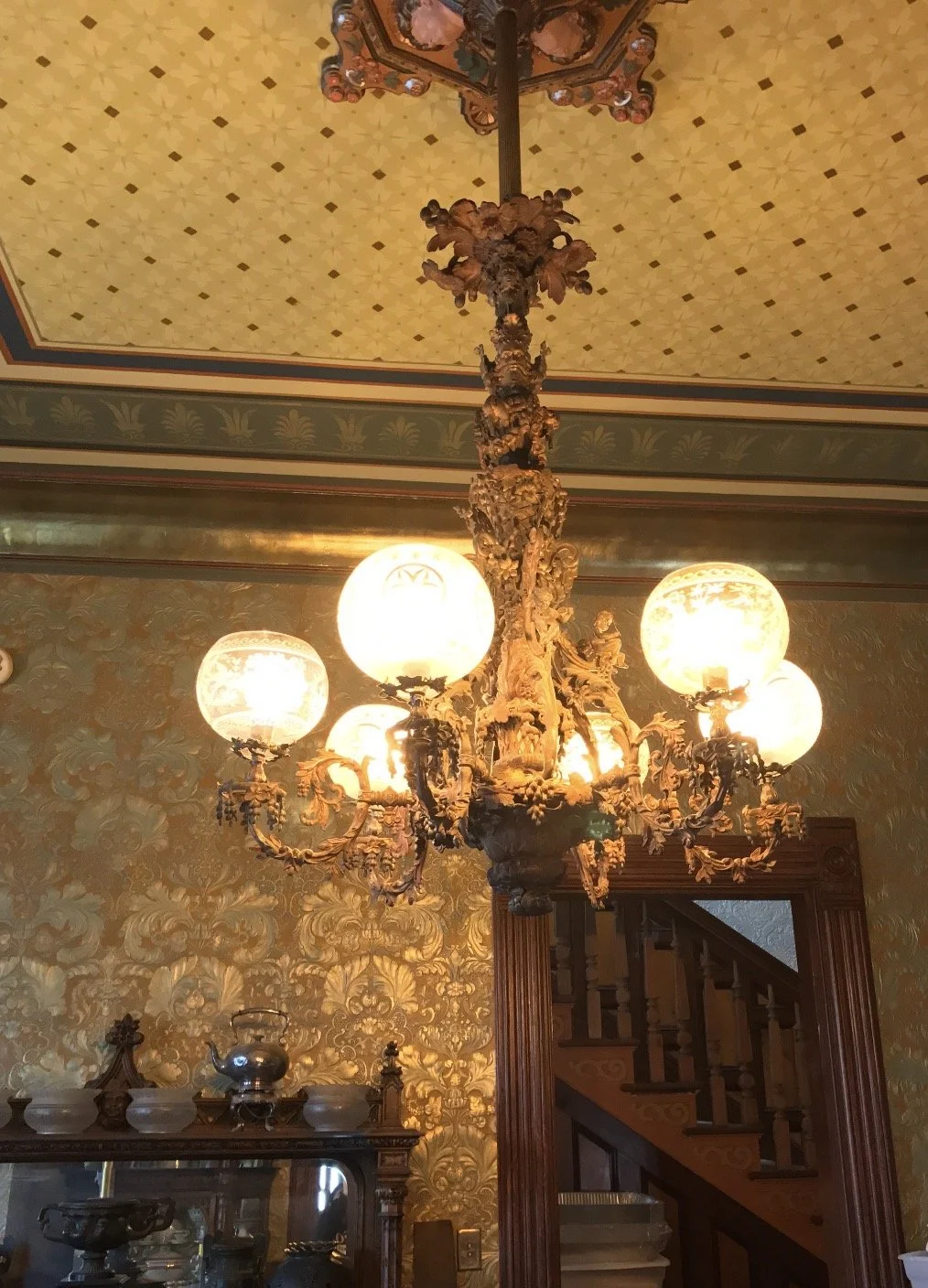
Henry Hooper Six Arm Chandelier
Henry Northey Hooper (1799-1865), Boston, MA
Originally from “Beechwood Lodge,” Meriden, Connecticut, also known as the Wilcox-Parker Mansion, completed in 1870
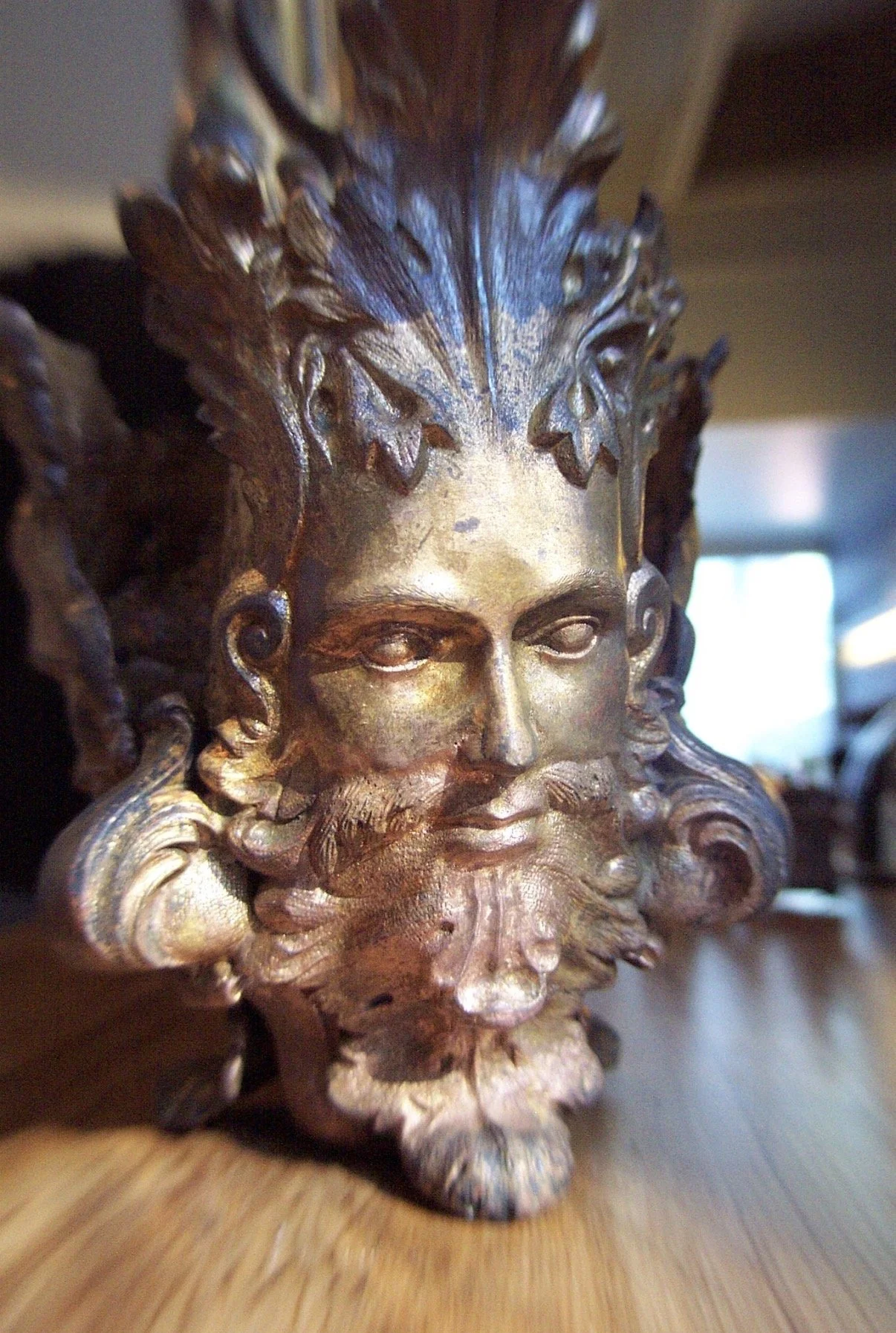
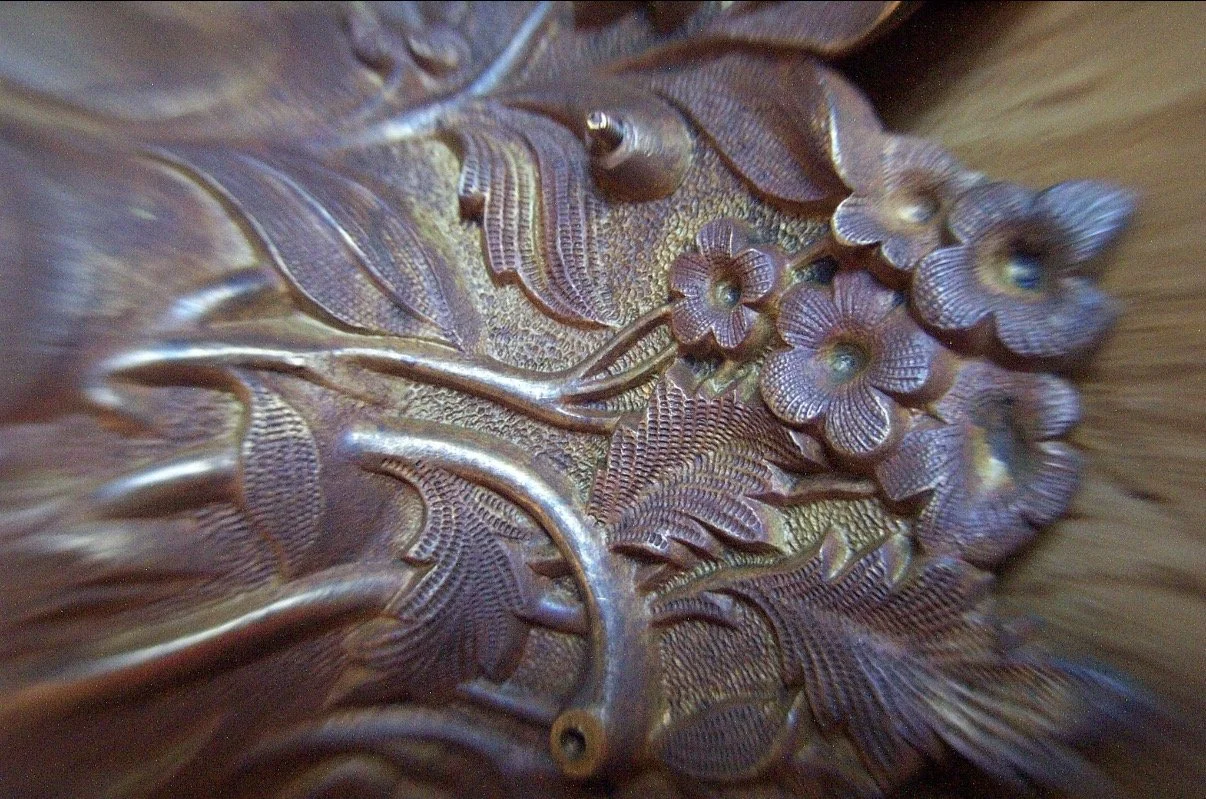
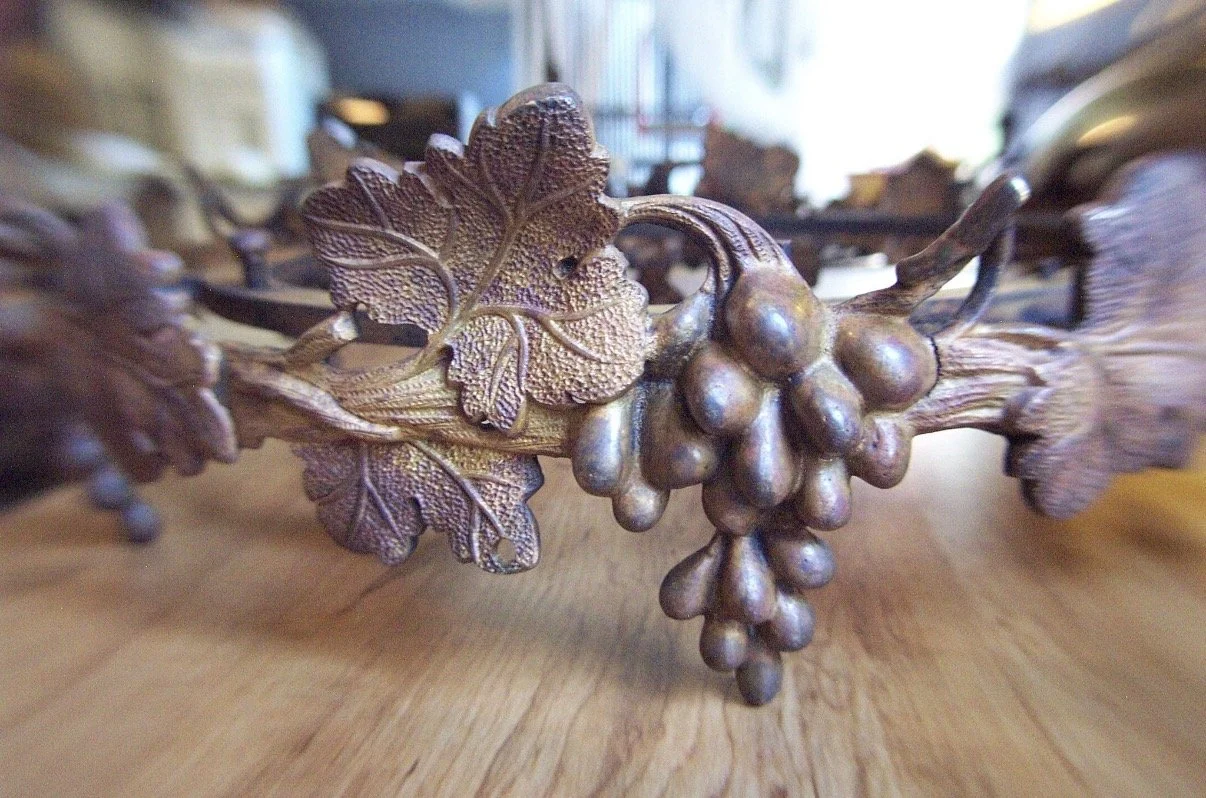
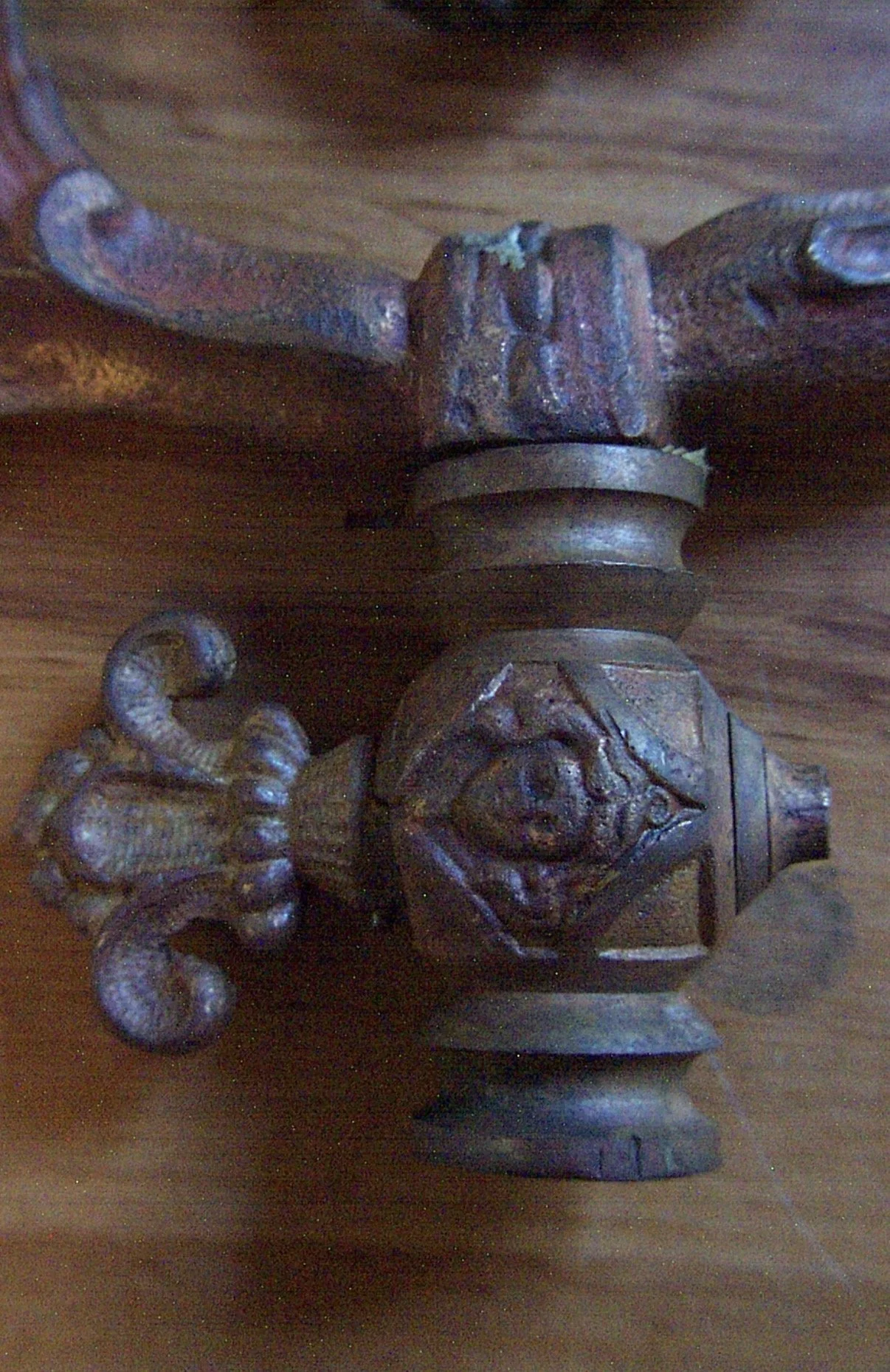
This exceptional piece of gas lighting was produced by a lighting manufacturer best known for the exquisite details and exceptional quality his workshop put into their pieces. Unlike most competitors who worked mainly in hollow cast brass, or bronze, or stamped brass ornamentation, Hooper’s creations were mainly solid cast bronze with some stamped brass pieces. This allowed for those exceptionally detailed elements to be created. His advantage was a result of the technical sophistication of his foundry, originally created to produce monumental bronze casting, bells, and architectural and decorative metalwork.
Beechwood Lodge (1870-1971)
Built between 1868 and 1870, the mansion for Jedediah Wilcox was completed and furnished in 1870 at a cost of $150,000. Located at 816 Broad Street in Meriden, Connecticut, this 40-room mansion was designed by architect Augustus Truesdell. Sadly, the home would stay in the Wilcox family for only four years. In an 1887 retrospective article in the Meriden Daily Journal, Jedediah was forced to sell the home as a result of his financial downturn which was attributed to debt he incurred in constructing the Wilcox Woolen Mill on Pratt Street, as he faced financial ruin from the failure of his woolen manufacturing enterprise.
Wilcox was an extraordinarily ambitious industrialist. In addition to carpet bags and textiles, he invested in silver plating, brass manufacturing, printing, and numerous other enterprises. Several failed, leaving him heavily in debt, and forced the newly-built mansion into an auction. While it was sold fully furnished to William L. Bradley, associated with the prominent Bradley manufacturing family for $44,100. However, the ultimate owner was Charles Parker, who was Jedediah Wilcox’s industrial and political rival. Not only did Parker defeat Wilcox in Meriden’s first mayoral election in 1867, Wilcox was outbid on his own home at the auction, opening the way for Parker to ultimately acquire it. The Parker family occupied the mansion for generations.
The Parker family held frequent gatherings for civic events, musical performances, and elaborate public celebrations. They hosted distinguished visitors, as well, most notably in 1875, the mansion hosted Bishop Andrews and a gathering of clergymen during a Methodist conference. In 1876, it was reportedly the most brilliantly illuminated residence in Meriden during a citywide celebration in November. This is particularly relevant, considering Parker’s manufacturing interests in lighting fixtures. In 1920, the mansion was Meriden’s highest-assessed residence. Even after fifty years, it remained an exceptional property, and the Parker family maintained much of the mansion’s extraordinary original interiors and furnishings over their sixty-year stewardship.
After the Parkers sold the mansion in 1934, it became known as Beechwood Lodge, and was operated as a retirement and convalescent home. By the mid 1960s, the convalescent home had ceased operating, due to decreasing profits. Without an income, deferred maintenance caused deterioration of the once-grand home. In 1967, the City of Meriden planned to purchase and operate the home as a museum, securing significant State financial grants toward that goal. However, preservation efforts became entangled in disputes over redevelopment, with Mobil holding an option to purchase the estate to build a motor inn, restaurant, and service station. Eventually, Mobil successfully changed the property zoning from residential to commercial, despite local citizens objections. Ultimately, in 1971, the City issued a demolition order, and the architectural elements and furnishings were sold in preparation for that demolition. After the demolition, the property was sold to Mobil, however the planned development was never built. It is currently an office and medical complex called The Beeches.
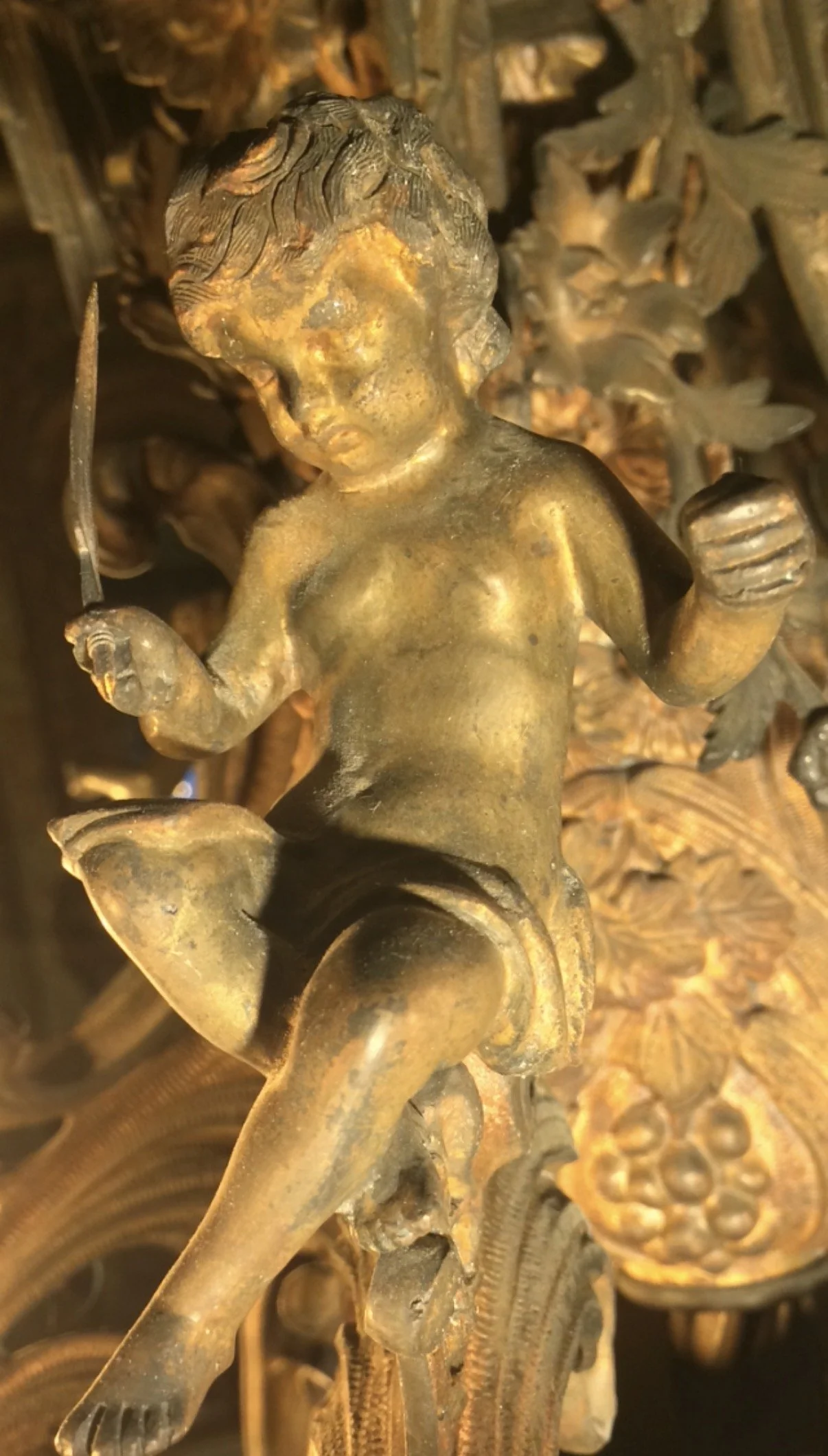
The interiors: the Metropolitan Museum of Art purchased the architectural elements and furnishings of the parlor of the home and installed it in their American Wing as their Renaissance Revival room, gallery 737. They also purchased the formal entrance hall and magnificent staircase. The cast iron fence surrounding the Sublett Miller House at 878 Main Street, Danville, VA once graced the front property of that home as well. The chandelier in the dining room of the Sublett Miller House was formerly in Beechwood Lodge, likely from the library, given the putti holding inkwells and feather pens that adorn each arm.
Close-ups of the elaborately detailed castings from the chandelier