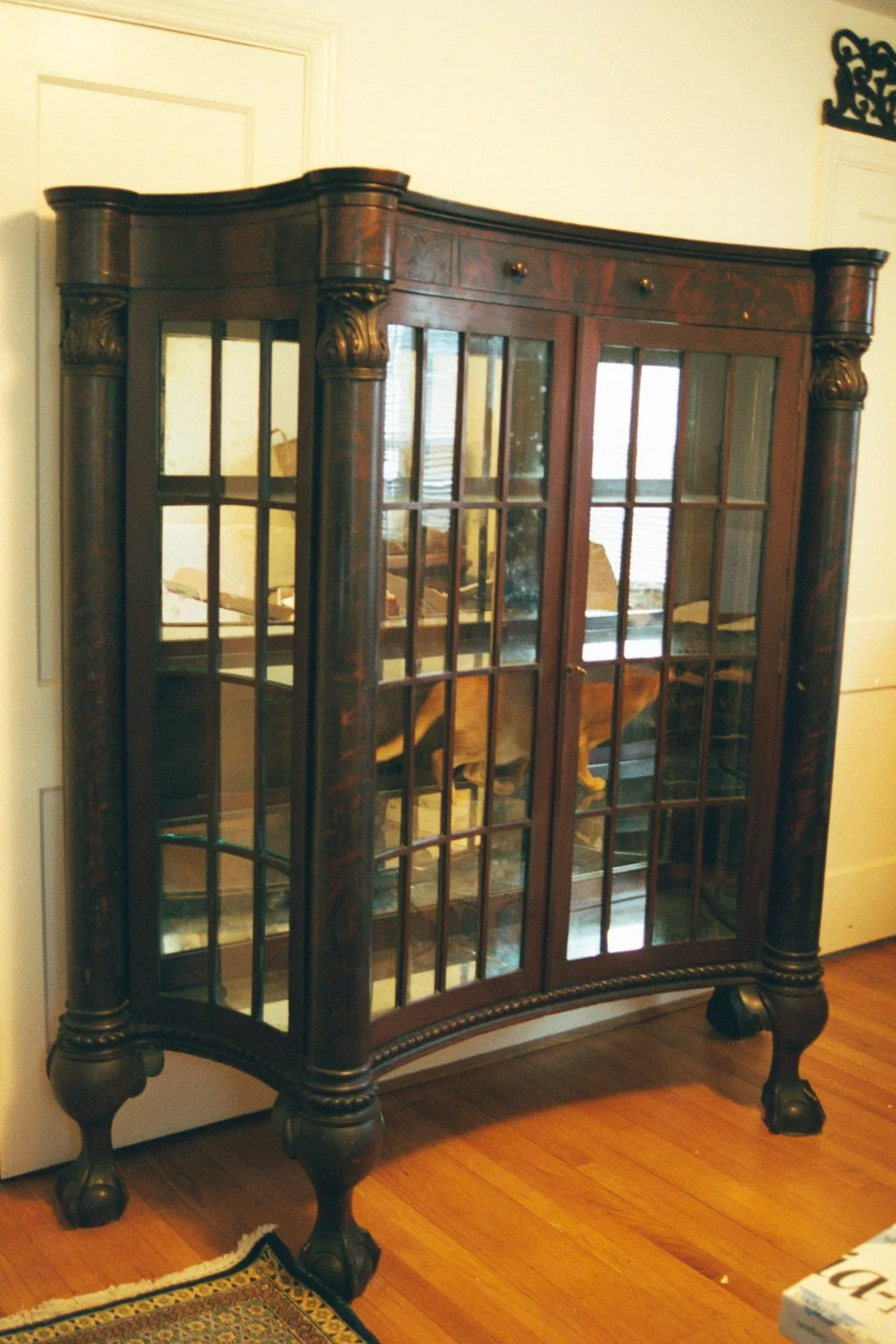
American Empire Curio Cabinet c.1820-1840
Mahogany and flame mahogany veneer with hand-blown glass
This imposing curved glass display cabinet reflects the bold architectural character of the American Empire period. Its deeply projecting skirted cornice supports glazed doors divided by mullions and architectural columns with flame mahogany veneers. The substantial eagle claw and ball feet give the piece the monumentality associated with American furniture of the early nineteenth Century. The acanthus leaf capitals and overall form show the influence of European Neoclassicism and the French Empire style during that period.
Empire Furniture in Victorian Homes
The Victorian aesthetic was one of excess, no doubt, but it was built upon a firm foundation of appreciation of quality and love of family. With most of the wealth in the Victorian era created by individuals who had come from relatively humble backgrounds, it was common to find humble but quality-built family heirlooms among the exuberant Victorian furnishings and textiles. This early Empire piece would have been right at home in any Victorian house of substance, having been transported from family homes in the North where cabinet makers in New York, Baltimore, and Philadelphia were the major cabinetmaking centers producing quality Empire furniture that was built to last. With Mr. Miller’s origins in Massachusetts, it would be highly likely for his family to have left him furniture such as this, which he would have carried with him to his new home in the South. This piece, collected in Connecticut by the current owners of the house, therefore, would be right at home here.
In addition, there was a period of Empire Revival beginning around 1890, where the appreciation for such family heirlooms created a market for new furniture to be made in their image. Victorian homes built during that period would often incorporate these pieces to give their homes the generational feel that they saw in the earlier Victorian homes in their community.